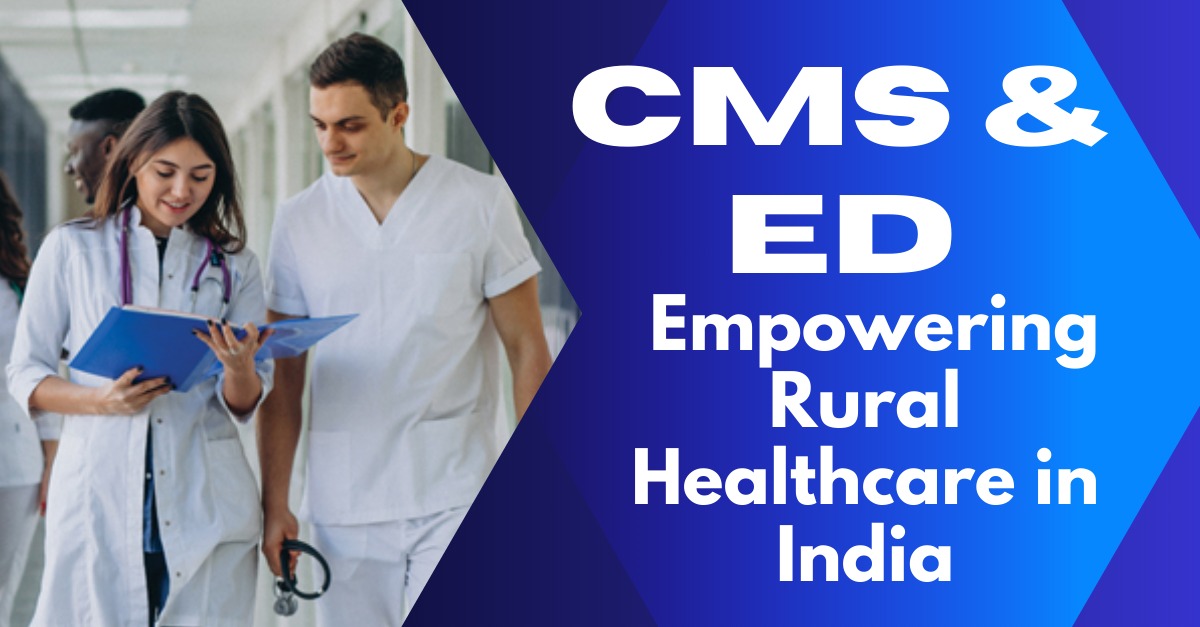
In rural India, access to quality healthcare remains a significant challenge. Many communities lack healthcare providers, forcing individuals to travel long distances for even basic medical treatment. This gap in healthcare services can be critical, especially during emergencies when immediate care is necessary. To address this issue, the Supreme Court of India has recognized the CMS & ED course, which trains individuals to deliver primary healthcare services in rural areas. This 18-month diploma program is divided into three semesters and equips graduates with the skills needed to serve their communities effectively.
What is CMS & ED?
CMS & ED stands for Community Medical Services and Essential Drugs. The program focuses on training individuals to provide essential medical services in rural areas, emphasizing the use of essential medications to treat common ailments. Unlike traditional medical education, this course offers a quicker path to becoming a primary healthcare provider without the extensive training required for an MBBS degree.
Key Features of CMS & ED Course
| Particulars | Details |
|---|---|
| Course Name | Community Medical Services & Essential Drugs (CMS & ED) |
| Course Level | Diploma Level |
| Course Duration | 18 months (3 semesters) |
| Mode of Education | Online and Offline (Blended Learning) |
| Eligibility | 10th or 12th pass with relevant work experience |
| Course Fee | Approximately ₹50,000 – ₹80,000 |
| Approvals | UGC, MCI, INC, PCI |
Eligibility Criteria for CMS & ED Diploma Course
To enroll in the CMS & ED program, candidates must meet the following criteria:
- Educational Qualification: A minimum of 10th or 12th standard from a recognized board.
- Work Experience:
- 2 years of relevant work experience for 10th pass candidates.
- 1 year of relevant work experience for 12th pass candidates.
- Stream Specialization: No specific stream specialization is required.
Course Duration and Structure
The CMS & ED program spans 18 months, typically divided into three semesters of six months each. The first two semesters focus on theoretical learning, while the final semester involves a practical internship, allowing students to apply their knowledge in real-world settings.
Breakdown of CMS & ED Course Structure
- Semester 1: Introduction to basic medical concepts, human anatomy, and physiology.
- Semester 2: Training in essential drugs, their applications, and treatment of common ailments.
- Semester 3: Internship and hands-on training in primary healthcare settings.
Academic Fees for CMS & ED Course
The total academic fee for the CMS & ED course generally ranges from ₹50,000 to ₹80,000, including registration and tuition fees. Candidates have the option to pay the fees either in full or in installments (semester-wise). Many universities also offer EMI options to make the payment process easier.
Syllabus and Curriculum
The CMS & ED curriculum is designed to provide a comprehensive understanding of essential healthcare services. Key topics include:
- Human Anatomy and Physiology: Basics of the human body and its functions.
- Pharmacology: Understanding of essential drugs and their reactions.
- First-Aid Procedures: Techniques for treating common medical emergencies.
- Infectious Diseases: Identifying and managing common ailments prevalent in rural areas.
Registration Open Now!
Apply now & unlock exciting scholarship opportunities at Chandigarh University.
100% OFF Application Fee
Get your coupon code instantly and apply for CUCET 2026.
💬 Get Coupon
Get Up to 100% Scholarship on
Your Chosen Program.
your admission opportunity.
Sample CMS & ED Syllabus
| Semester | Subjects |
|---|---|
| Semester 1 | Human Anatomy, Introduction to Pharmacology |
| Semester 2 | First-Aid Techniques, Infectious Diseases |
| Semester 3 | Internship and Practical Training |
The Scope of CMS & ED
The CMS & ED course aims to bridge the gap in healthcare services in rural India. Graduates can work in various capacities, including:
- Primary Healthcare Provider: Deliver basic medical services to the community.
- Healthcare Educator: Raise awareness about health and hygiene.
- Entrepreneur: Open personal healthcare centers in underserved areas.
The demand for trained healthcare providers is increasing, making this course a viable option for those passionate about serving the community.
Registration Open Now!
Apply now & unlock exciting scholarship opportunities at Chandigarh University.
100% OFF Application Fee
Get your coupon code instantly and apply for CUCET 2026.
💬 Get Coupon
Get Up to 100% Scholarship on
Your Chosen Program.
your admission opportunity.
Approvals for CMS & ED Programs in India
Before enrolling in the CMS & ED program, it is crucial to verify the course’s accreditation. The following approvals ensure that the program meets national educational standards:
- University Grants Commission (UGC)
- Medical Council of India (MCI)
- Pharmacy Council of India (PCI)
- Indian Nursing Council (INC)
Why Choose CMS & ED?
Here are several reasons why the CMS & ED course stands out:
- Short Duration: At 18 months, this course is significantly shorter than traditional medical programs, making it accessible for those who want to enter the healthcare field quickly.
- No Stream Specialization Required: Unlike many medical courses that require a science background, CMS & ED accepts candidates from various educational backgrounds.
- Practical Focus: The course emphasizes hands-on training, preparing graduates to handle real-world healthcare challenges.
- Approval and Accreditation: Graduates are recognized as accredited healthcare providers, allowing them to establish primary healthcare centers.
How to Apply for the CMS & ED Course
Applying for the CMS & ED course is straightforward. Follow these steps:
- Register Online: Visit the university’s official website and fill out the registration form.
- Complete the Application Form: Log in with your credentials and fill in the application form accurately.
- Upload Documents: Submit the required documents in the specified format.
- Pay the Fees: Review your application and submit the fee as instructed.
- Confirmation: After verification, you will receive an email confirming your admission.
Career Opportunities After CMS & ED
Upon completing the CMS & ED course, graduates can explore various job opportunities, including:
- Community Health Worker: Working in local health initiatives.
- Rural Medical Officer: Providing healthcare in rural clinics.
- Pharmacy Assistant: Assisting in pharmacies and medication distribution.
- Emergency Healthcare Provider: Responding to medical emergencies.