Introduction
Agriculture plays a crucial role in sustaining the global economy and ensuring food security. However, plant diseases significantly impact crop yields, leading to economic losses and food shortages. The field of Plant Pathology addresses these challenges by studying plant diseases, their causes, and sustainable management techniques.
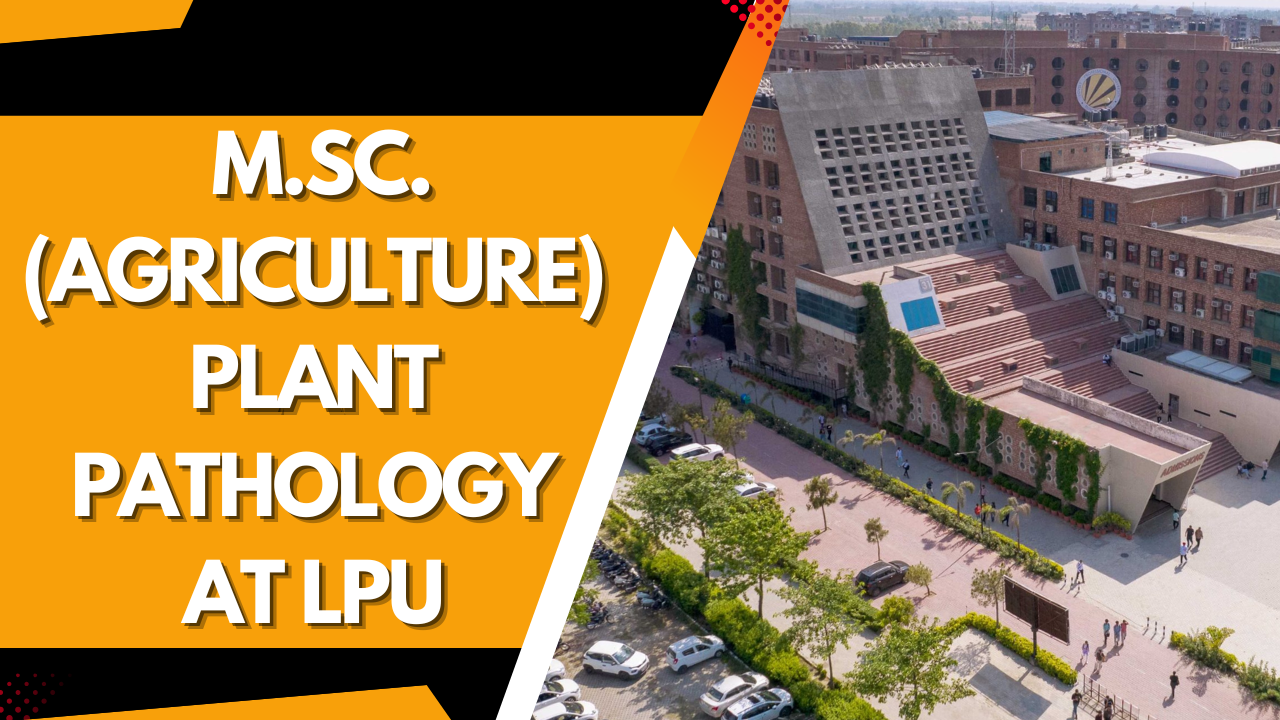
Lovely Professional University (LPU) offers a Master of Science (M.Sc.) in Agriculture with a specialization in Plant Pathology, designed to equip students with theoretical knowledge and practical skills in plant disease management, mycology, bacteriology, virology, and epidemiology. This blog explores various aspects of the M.Sc. (Agriculture) Plant Pathology at LPU, including course structure, career opportunities, facilities, and the reasons why LPU stands out as an excellent choice for aspiring plant pathologists.
🎓 LPUNEST 2026 Registration Open
Apply smart & unlock exclusive benefits
🎁 20% Coupon + Scholarship
Get verified coupon & scholarship guidance instantly
📝 Book Your LPUNEST Exam
📱 Call/WhatsApp: 9056161621
🧑🏫 Need help? We’re here to guide you.
We make the LPUNEST journey simple — reach out anytime.
What is Plant Pathology?
Plant Pathology is a branch of agricultural science that deals with the study of plant diseases caused by pathogens such as fungi, bacteria, viruses, nematodes, and environmental factors. The goal of plant pathologists is to understand the disease cycle, develop preventive measures, and implement sustainable disease management strategies to protect crops and enhance agricultural productivity.
M.Sc. (Agriculture) Plant Pathology at LPU: Course Overview
1. Duration and Eligibility
-
Duration: 2 years (4 semesters)
-
Eligibility: Candidates must have a M.Sc. (Agriculture) Plant Pathology at LPU or related disciplines from a recognized university with a minimum required percentage as per LPU’s guidelines.
2. Course Structure
The curriculum is designed to provide students with a strong foundation in plant pathology through a combination of theoretical classes, laboratory work, and field research. Key subjects include:
Core Subjects:
-
Mycology and Fungal Pathogens
-
Bacteriology and Bacterial Diseases of Plants
-
Virology and Viral Plant Diseases
-
Nematology and Nematode-Plant Interactions
-
Principles of Plant Disease Management
-
Epidemiology and Forecasting of Plant Diseases
-
Host-Pathogen Interaction and Disease Resistance
-
Molecular Techniques in Plant Pathology
Practical Training and Research:
-
Identification of plant pathogens through microscopy and molecular techniques
-
Isolation and culturing of plant pathogens
-
Greenhouse and field studies on disease management
-
Conducting research projects and writing a thesis
-
Industrial training and internships in agro-based companies and research institutions
Why Choose LPU for M.Sc. (Agriculture) in Plant Pathology?
1. State-of-the-Art Infrastructure
LPU boasts one of the best agricultural research facilities, including M.Sc. (Agriculture) Plant Pathology at LPU. These resources enable students to gain hands-on experience in diagnosing and managing plant diseases effectively.
2. Experienced Faculty and Industry Experts
LPU’s faculty members are highly qualified professionals with extensive experience in plant pathology research and disease management. Additionally, guest lectures from industry experts help students stay updated with the latest advancements in the field.
3. Industry-Oriented Curriculum
The curriculum is aligned with industry standards, incorporating practical exposure, research-based learning, and case studies to ensure that students are well-prepared for real-world challenges in plant pathology.
🎓 LPUNEST 2026 Registration Open
Apply smart & unlock exclusive benefits
🎁 20% Coupon + Scholarship
Get verified coupon & scholarship guidance instantly
📝 Book Your LPUNEST Exam
📱 Call/WhatsApp: 9056161621
🧑🏫 Need help? We’re here to guide you.
We make the LPUNEST journey simple — reach out anytime.
4. Research Opportunities and Publications
Students are encouraged to conduct independent research and publish their findings in reputed journals, enhancing their academic and professional profiles.
5. Strong Industry Collaborations
LPU has partnerships with agriculture research institutes, biotech firms, and government agencies, providing students with ample opportunities for internships, training, and placements.
6. Placement and Career Support
The university offers dedicated placement assistance, helping students secure positions in agriculture research organizations, agrochemical companies, seed industries, government agencies, and academia.
Career Opportunities After M.Sc. (Agriculture) Plant Pathology
A degree in Plant Pathology opens up diverse career avenues in research, academia, government agencies, and the private sector. Some of the prominent career paths include:
1. Research Scientist
-
Work in government and private research institutions like ICAR, IARI, and CSIR.
-
Conduct experiments on plant disease control and management.
2. Plant Pathologist
-
Diagnose plant diseases and recommend sustainable management solutions.
-
Work with agriculture departments, agrochemical companies, and research centers.
-
LPUNEST 2026 🎓 LPUNEST 2026 Registration Open
Apply smart & unlock exclusive benefits
💬 WhatsApp Now🎁 20% Coupon + Scholarship
Get verified coupon & scholarship guidance instantly
📅 BOOK NOW📝 Book Your LPUNEST Exam
📱 Call/WhatsApp: 9056161621
🧑🏫 Need help? We’re here to guide you.
We make the LPUNEST journey simple — reach out anytime.
3. Agricultural Officer
-
Work in government agricultural departments to advise farmers on disease management and crop protection strategies.
4. Crop Consultant
-
Assist farmers and agribusinesses in improving crop health and disease resistance.
-
Work with agritech companies, NGOs, and cooperative farming organizations.
5. Academia and Teaching
-
Join universities and colleges as M.Sc. (Agriculture) Plant Pathology at LPU in plant pathology and related disciplines.
6. Quality Control and Regulatory Roles
-
Work in seed certification agencies, quarantine centers, and regulatory bodies ensuring plant health standards.
7. Agrochemical and Biotech Industry
-
Engage in R&D, product development, and marketing of bio-pesticides and fungicides.
Future Scope and Emerging Trends in Plant Pathology
With the increasing impact of climate change, urbanization, and global trade, plant disease outbreaks have become more frequent, emphasizing the need for skilled plant pathologists. The following trends indicate promising prospects in this field:
1. Biotechnological Innovations
-
Use of genetic engineering and CRISPR technology for disease-resistant crops.
-
Development of bio-control agents as an alternative to chemical pesticides.
2. Digital and Precision Agriculture
-
Application of AI, IoT, and remote sensing in plant disease detection.
-
Use of drones and smart sensors for real-time disease monitoring.
3. Climate-Resilient Farming
-
Research on how climate change influences plant diseases.
-
Development of stress-resistant crop varieties to withstand disease outbreaks.
4. Organic and Sustainable Disease Management
-
Growing demand for organic farming and eco-friendly plant protection methods.
-
Emphasis on integrated pest management (IPM) techniques.
Conclusion
The M.Sc. (Agriculture) Plant Pathology at LPU is an excellent program for students interested in advancing their knowledge and careers in plant disease management. With its world-class infrastructure, experienced faculty, research-oriented curriculum, and strong industry connections, LPU provides an ideal platform for aspiring plant pathologists to excel in their field.
If you are passionate about agriculture, research, and plant disease management, pursuing this course at LPU can be a stepping stone to a fulfilling and impactful career.
How to Apply?
Interested candidates can visit the official LPU website for admission details, eligibility criteria, and the application process. Embark on your journey to becoming a plant pathology expert with LPU today!