
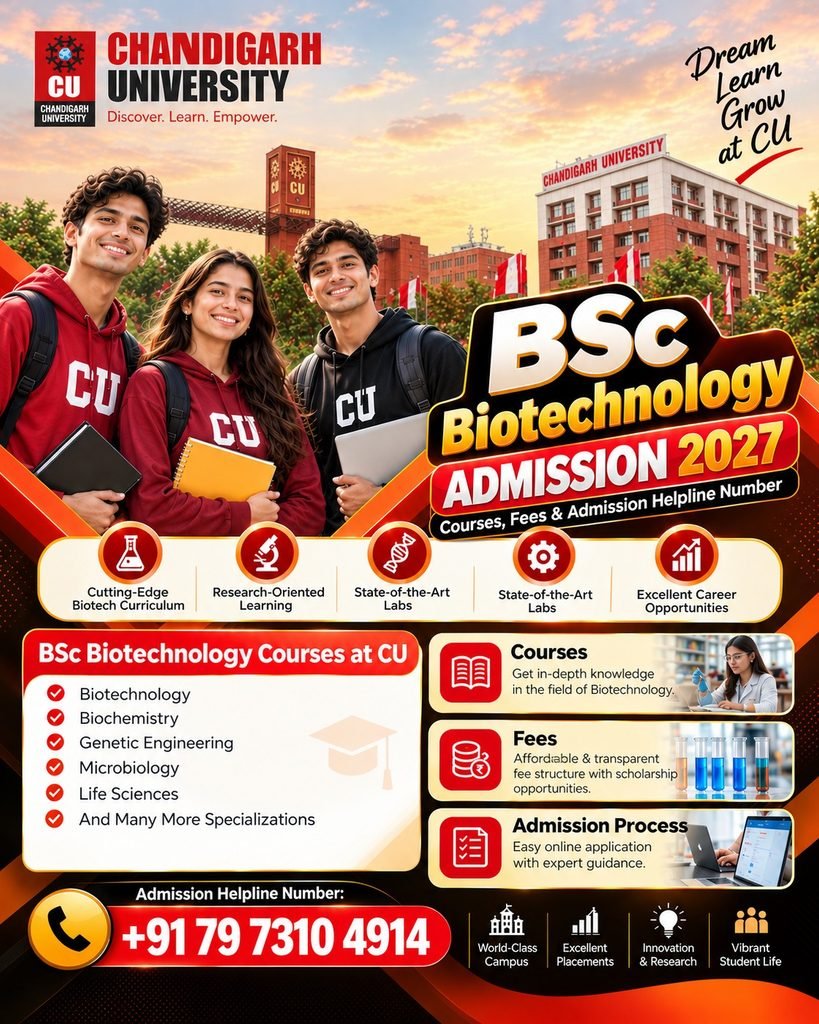
Chandigarh University BSc Biotechnology Admission Help is useful for students who want to pursue a career in biotechnology, biological sciences, genetics, microbiology, and related research fields. Biotechnology combines biology with modern technology to develop solutions for healthcare, agriculture, pharmaceuticals, food production, and environmental protection. With growing interest in scientific innovation, this field offers opportunities for students who enjoy understanding living organisms and exploring how science can improve everyday life.
Chandigarh University provides undergraduate programmes in science and related disciplines, allowing students to explore different academic and career pathways. Before applying for a BSc Biotechnology programme, students should understand the eligibility requirements, admission process, course structure, fee considerations, scholarship opportunities, and future career prospects.
This guide explains the important aspects of Chandigarh University BSc Biotechnology admission and helps students prepare for the application process.
Overview of BSc Biotechnology at Chandigarh University
BSc Biotechnology is an undergraduate science programme focused on applying biological knowledge and technological methods to practical problems. It introduces students to subjects such as genetics, molecular biology, microbiology, biochemistry, and cellular biology. Depending on the specific programme and curriculum, students may also explore bioinformatics, genetic engineering, immunology, and industrial biotechnology.
At Chandigarh University, students interested in biotechnology should check the current programme title, duration, curriculum, and eligibility criteria before submitting an application. Programme availability and academic requirements can change between admission cycles.
The course is suitable for students who have completed their higher secondary education in the science stream and want to develop a foundation in biological sciences. It can also prepare students for further studies in biotechnology, microbiology, genetics, biochemistry, and related specialisations.
Students should consider their interests, long-term goals, and preferred career path when deciding whether biotechnology is the right undergraduate option.
Why Choose Biotechnology as a Career?
Biotechnology has applications across several industries, including healthcare, agriculture, pharmaceuticals, food technology, and environmental science. Researchers and biotechnology professionals work on developing diagnostic methods, improving crop characteristics, studying diseases, producing biological products, and exploring sustainable technologies.
One important advantage of biotechnology is its interdisciplinary nature. Students learn how biological systems work while developing an understanding of laboratory techniques and scientific research methods.
Biotechnology may be a suitable choice for students who enjoy practical experiments, scientific investigation, and problem-solving. It can also provide a foundation for postgraduate education and specialised research.
However, students should understand that many advanced scientific positions require postgraduate qualifications or additional technical training. An undergraduate degree is often the starting point for building the knowledge and experience needed for long-term professional growth.
Eligibility Criteria for BSc Biotechnology Admission
Eligibility is one of the most important aspects of the Chandigarh University BSc Biotechnology admission process. Students should review the latest official admission requirements before applying because the required subjects and minimum qualifying marks may vary by programme.
Applicants generally need to have completed Class 12 or an equivalent examination from a recognised educational board. Students with a science background are typically the most relevant applicants for biotechnology programmes.
Depending on the programme requirements, subjects such as Biology, Chemistry, Physics, or Mathematics may be considered. Students should confirm which subject combinations are accepted for their chosen course.
The university may also specify minimum marks in the qualifying examination. Meeting the minimum eligibility criteria does not necessarily guarantee admission, as additional conditions may apply.
Students preparing to apply should keep their Class 10 and Class 12 academic records ready. Applicants awaiting their final board examination results should check whether provisional applications are permitted and understand the deadlines for submitting final marksheets.
Chandigarh University BSc Biotechnology Admission Process
The admission process generally involves selecting the programme, completing an application, submitting academic information, and fulfilling the university’s admission requirements.
Research the Programme
Before applying, students should review the available undergraduate science programmes and confirm that the biotechnology option matches their academic interests. It is important to check the course duration, subjects, practical components, and available specialisations.
Students should also understand whether the programme focuses primarily on theoretical learning, laboratory training, or a combination of both.
Complete the Application Form
Applicants need to complete the university’s prescribed application process and provide accurate personal and educational information. Details such as the applicant’s name, contact information, qualifying examination, and academic history should be entered carefully.
Any incorrect information may create problems during document verification or admission confirmation.
Submit the Required Documents
Students should prepare the documents requested by the university. These may include Class 10 and Class 12 marksheets, identity documents, photographs, and other certificates specified in the application instructions.
Applicants should ensure that the information on their documents matches the details entered in the application form.
Check Admission Requirements
After submitting the application, students should follow the university’s instructions regarding eligibility verification, entrance requirements, counselling, or other applicable admission procedures.
Applicants should not assume that every undergraduate programme follows the same selection process. Requirements should be confirmed specifically for BSc Biotechnology.
Confirm Admission
Once admission is offered, students should carefully review the admission communication, fee details, payment deadlines, and document-submission requirements.
Admission is generally finalised after the required formalities have been completed. Students should retain payment receipts and relevant admission documents for future reference.
Course Structure and Important Subjects
BSc Biotechnology introduces students to the scientific principles behind living organisms and their practical applications. The exact curriculum depends on the programme structure and the university’s current academic regulations.
Some important subjects commonly associated with biotechnology include the following.
Cell Biology: Students learn about cell structure, cellular functions, cell division, and the organisation of living systems.
Biochemistry: This subject explores biological molecules, enzymes, proteins, carbohydrates, lipids, and the chemical reactions necessary for life.
Genetics: Students study heredity, genes, chromosomes, genetic variation, and the transmission of biological characteristics.
Microbiology: This area focuses on microorganisms such as bacteria, fungi, and other microscopic life forms, including their roles in health, industry, and the environment.
Molecular Biology: Students explore DNA, RNA, protein synthesis, and the molecular processes that control biological activity.
Biotechnology Techniques: Depending on the curriculum, students may be introduced to laboratory methods used in biological research, including sample preparation, microscopy, and molecular analysis.
Bioinformatics: Some programmes introduce computational methods for analysing biological data and understanding genetic information.
Laboratory sessions and practical assignments are important parts of biotechnology education. Students should review the current syllabus to understand which subjects and practical techniques are included in their selected programme.
Importance of Practical and Laboratory Learning
Biotechnology is a science-based discipline, so practical learning plays a significant role in developing professional skills. Laboratory sessions help students connect classroom concepts with real scientific procedures.
Students may learn to handle laboratory equipment, prepare samples, observe microorganisms, conduct basic biochemical experiments, and maintain accurate experimental records. The specific activities depend on the available facilities and curriculum.
Practical learning also develops discipline, attention to detail, teamwork, and the ability to follow laboratory safety guidelines. These skills are valuable for students planning to pursue research or technical employment.
When evaluating Chandigarh University BSc Biotechnology admission, applicants should ask about laboratory facilities, practical training, research opportunities, faculty expertise, and internship support.
Students should also understand that hands-on experience outside regular classroom sessions may strengthen their professional profiles. Internships, supervised projects, workshops, and research assignments can help them develop skills relevant to future employment or higher education.
Chandigarh University BSc Biotechnology Fees
Course fees are an important consideration for students and their families. The total cost of studying biotechnology may include tuition fees, examination charges, laboratory-related charges, hostel accommodation, food, transportation, and other applicable expenses.
The exact fee for Chandigarh University BSc Biotechnology should be confirmed through the university’s current admission information. Students should avoid relying on outdated fee estimates because charges may change between academic sessions.
Before accepting admission, applicants should calculate the overall cost of completing the programme rather than considering tuition fees alone.
Students planning to live on campus should compare hostel options, accommodation charges, meal arrangements, and other living expenses. Those travelling from home should estimate transportation costs.
It is also useful to ask whether fees are payable semester-wise or annually and whether any additional charges apply.
A clear understanding of the financial commitment helps students plan their education more effectively and avoid unexpected expenses after admission.
Scholarships and Financial Assistance
Scholarships can help eligible students reduce the financial burden of undergraduate education. Chandigarh University may offer scholarship opportunities according to its current policies, eligibility requirements, and applicable admission categories.
Scholarship availability and the amount of financial assistance can depend on factors such as academic performance, qualifying examination results, entrance-related criteria, or other university-defined conditions.
Students should verify the scholarship rules applicable to their chosen biotechnology programme and admission year.
Before applying for financial assistance, applicants should understand the minimum marks required, documents needed, application deadlines, and conditions for continuing the scholarship in later semesters.
Some scholarships may require students to maintain a specified academic performance or fulfil other conditions throughout their studies.
Applicants should also check whether scholarships apply to tuition fees only or cover other expenses. A scholarship may not necessarily cover hostel accommodation, food, or examination charges.
Planning scholarship applications early can help students understand the available financial options before confirming their admission.
Career Opportunities After BSc Biotechnology
A BSc Biotechnology degree can provide a foundation for entry-level roles and further education in scientific and technical fields. Career opportunities depend on the student’s practical experience, technical skills, academic performance, and the qualifications required by employers.
Laboratory Assistant: Graduates may explore laboratory-support positions involving sample preparation, equipment handling, record maintenance, and routine testing.
Research Assistant: Some research organisations and laboratories recruit graduates for supervised research-support activities, depending on the position’s eligibility requirements.
Quality Control Assistant: Biotechnology and related industries use quality-control procedures to maintain product standards and monitor laboratory processes.
Microbiology Laboratory Support: Graduates with suitable training may explore roles involving microbiological testing and laboratory operations.
Biotechnology Production Assistant: Some companies offer entry-level opportunities in production environments involving biological materials or related products.
Pharmaceutical Industry Roles: Graduates may seek suitable support positions in pharmaceutical and life-science organisations, subject to employer requirements.
Food and Agricultural Biotechnology: Related industries may offer opportunities in quality testing, production support, agricultural research assistance, and biological product development.
Students should remember that specialised research, independent scientific work, and certain clinical or diagnostic laboratory positions may require a postgraduate degree, professional certification, or other specific qualifications. Graduates should carefully review job descriptions before applying.
Higher Education After BSc Biotechnology
Many students choose postgraduate education after completing their undergraduate degree. Further study can help them develop advanced knowledge, improve research skills, and qualify for specialised professional roles.
Possible options include MSc Biotechnology, MSc Microbiology, MSc Biochemistry, MSc Genetics, MSc Molecular Biology, and other related science programmes.
Students interested in computational biology may explore bioinformatics or related interdisciplinary programmes, subject to eligibility requirements.
Those who wish to pursue academic research may consider doctoral studies after completing the necessary postgraduate qualifications.
Higher education can be particularly useful for students interested in advanced laboratory work, research and development, scientific analysis, or academic careers.
Before selecting a postgraduate programme, students should compare the curriculum, research facilities, admission requirements, and career opportunities associated with each specialisation.
Building strong academic fundamentals during the undergraduate years can make postgraduate study more manageable and productive.
Skills Students Should Develop During the Course
Success in biotechnology requires more than memorising scientific concepts. Students should gradually develop technical, analytical, and communication skills that support laboratory work and scientific problem-solving.
Important skills include:
- Laboratory techniques: Learning to use equipment correctly and follow experimental procedures.
- Analytical thinking: Interpreting results, identifying patterns, and understanding scientific evidence.
- Research skills: Reading scientific material, preparing reports, and understanding experimental methods.
- Data interpretation: Analysing observations and presenting results accurately.
- Communication: Explaining scientific concepts clearly in written reports and presentations.
- Teamwork: Collaborating with classmates and laboratory supervisors.
- Safety awareness: Following laboratory rules and handling biological materials responsibly.
Students can improve these skills through regular practical sessions, academic projects, internships, and additional training opportunities.
Tips for Students Applying for Admission in 2027
Students planning to pursue Chandigarh University BSc Biotechnology admission in 2027 should begin preparing well before the application deadline.
First, confirm that the programme is available for the relevant admission session and review its eligibility criteria. Check the required subjects, minimum qualifying marks, and any additional selection requirements.
Second, organise academic documents and ensure that all personal information is accurate. Students awaiting board results should monitor the instructions for provisional applicants.
Third, prepare a realistic education budget that includes tuition, accommodation, food, travel, and other expenses.
Fourth, explore scholarship opportunities early and understand their eligibility conditions. Applicants should not assume that scholarship benefits are automatic or guaranteed.
Finally, review the curriculum and career pathways associated with biotechnology. Speaking with academic counsellors and asking detailed questions about laboratory training, internships, and postgraduate opportunities can help students make an informed decision.
Frequently Asked Questions
1. What is Chandigarh University BSc Biotechnology Admission Help?
Chandigarh University BSc Biotechnology Admission Help refers to guidance for students exploring programme eligibility, application procedures, required documents, fees, scholarships, and academic opportunities related to biotechnology admission.
2. Who can apply for BSc Biotechnology?
Students who have completed Class 12 or an equivalent qualification may be eligible, depending on the programme’s prescribed subject requirements and minimum marks. Applicants should verify the latest eligibility criteria before applying.
3. What subjects are important for biotechnology?
Important subjects include biology, chemistry, genetics, microbiology, biochemistry, cell biology, and molecular biology. The exact subjects depend on the programme curriculum.
4. How long does a BSc Biotechnology course take?
The duration depends on the specific degree structure and current university regulations. Students should confirm the programme duration and available study options before applying.
5. What is the fee for BSc Biotechnology at Chandigarh University?
The fee depends on the current academic session and applicable university charges. Students should obtain the latest official fee details and calculate additional expenses such as accommodation and food.
6. Are scholarships available for biotechnology students?
Eligible students may be able to apply for scholarships offered under the university’s current policies. Scholarship conditions, amounts, and qualifying criteria should be verified for the 2027 admission session.
7. What can I do after completing BSc Biotechnology?
Graduates can explore suitable entry-level laboratory, quality-control, production-support, and research-assistance roles. They may also pursue postgraduate studies to develop specialised knowledge and improve their career prospects.
8. Can I pursue MSc Biotechnology after BSc Biotechnology?
Yes, graduates may be eligible for MSc Biotechnology programmes, subject to the admission criteria of the institution they choose. Students should check subject requirements and minimum marks.
9. Is biotechnology a good career option?
Biotechnology may suit students interested in biology, laboratory work, scientific research, and technological applications. Career growth depends on practical skills, further qualifications, work experience, and industry requirements.
10. How can I prepare for admission in 2027?
Students should review the programme requirements, organise academic documents, understand the application process, compare fees, and investigate scholarships. Checking admission announcements regularly can help applicants meet deadlines.
Conclusion
Chandigarh University BSc Biotechnology Admission Help can guide aspiring science students through the essential steps involved in choosing a programme and preparing an application. Biotechnology offers opportunities to explore genetics, microbiology, molecular biology, and other scientific disciplines with applications in healthcare, agriculture, pharmaceuticals, and research.
Before applying for 2027 admission, students should confirm eligibility requirements, course availability, fees, scholarship conditions, and the current admission procedure. They should also consider laboratory training, internship opportunities, and options for postgraduate study.
With careful planning, consistent academic effort, and practical skill development, students can build a strong foundation for further education and suitable careers in biotechnology and related life-science fields.