Scope and Career Prospects of Agronomy

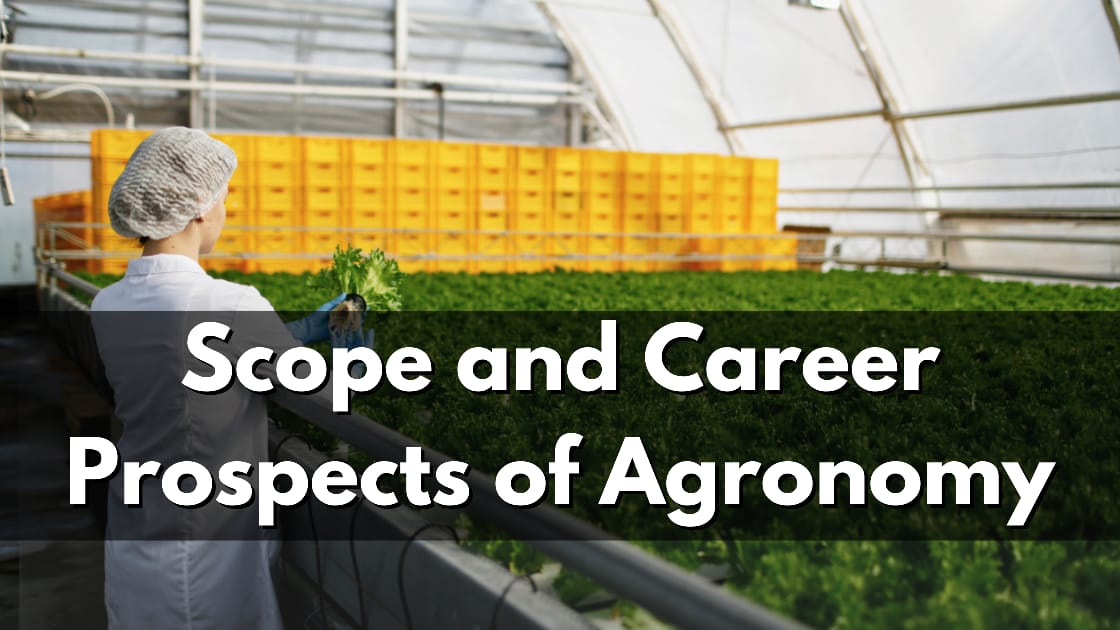
Agronomy represents a specialized sector of agriculture dedicated to maximizing food production through proficient management of agricultural fields. Agronomy, often referred to as the backbone of agricultural sciences, is the study of soil, plants, and crop production. With increasing focus on sustainable agriculture, food security, and innovative farming techniques, Agronomy has emerged as a crucial field. It integrates a wide range of disciplines, from soil science and plant biology to climate science and technology.
What is Agronomy?
Agronomy is the branch of agriculture that focuses on crop production and soil management. It involves the application of scientific techniques to optimize the growth of plants and the use of resources like water and fertilizers. Agronomy also plays a vital role in developing sustainable farming practices, ensuring food security, and combating the effects of climate change on agriculture.
Agronomists use various scientific principles to enhance the productivity and quality of crops while ensuring environmental sustainability. The field encompasses a wide range of activities, from plant breeding and biotechnology to the study of soil health and pest management.
Scope of Agronomy
The scope of Agronomy is vast and constantly expanding due to the global emphasis on sustainable agriculture. Here are some key areas where agronomists contribute significantly:
- Sustainable Farming: With the world’s growing population and limited resources, there is an increasing need for sustainable farming practices that maximize output without harming the environment. Agronomists work to create eco-friendly farming solutions.
- Soil and Water Management: Agronomists play a crucial role in managing soil health and water resources, ensuring that crops grow efficiently while minimizing the use of harmful chemicals.
- Crop Improvement: Through plant breeding and biotechnology, agronomists develop crops that are more resistant to pests, diseases, and environmental stresses such as drought or salinity.
- Precision Agriculture: Technology is increasingly being integrated into farming practices, and agronomists work with modern tools like drones, GPS systems, and data analytics to enhance productivity.
- Research and Development: Agronomy is essential for agricultural research and development, focusing on new ways to improve crop yields, nutrition, and sustainability.
- Food Security: Agronomists contribute to improving global food security by ensuring that agricultural practices meet the demand for food without depleting natural resources.
Career Opportunities in Agronomy
The career prospects in Agronomy are diverse, spanning various sectors such as agriculture, biotechnology, environmental science, and food production. Here are some of the most promising career paths in Agronomy:
| Career Option | Job Role | Average Salary (INR) | Growth Rate |
|---|---|---|---|
| Agronomist | Studies crop production and soil health to improve yields. | 5-10 LPA | 12% |
| Soil Scientist | Focuses on soil management, fertility, and conservation. | 6-9 LPA | 10% |
| Plant Breeder | Develops new crop varieties through genetic engineering. | 6-12 LPA | 14% |
| Agricultural Consultant | Advises farmers on improving crop production and management. | 4-8 LPA | 11% |
| Farm Manager | Oversees agricultural operations, labor, and resources. | 4-7 LPA | 9% |
| Research Scientist | Conducts research on crop production techniques. | 6-10 LPA | 13% |
| Agriculture Officer | Works with government bodies to implement agricultural policies. | 5-8 LPA | 11% |
| Environmental Specialist | Focuses on sustainable agriculture practices and environment conservation. | 5-9 LPA | 10% |
| Seed Production Specialist | Involved in the production and distribution of seeds. | 4-7 LPA | 10% |
Career Pathways in Agronomy
- Agronomist: Works on improving crop production through soil management, plant breeding, and sustainable agricultural practices.
- Skills Required: Knowledge of soil and plant biology, research abilities, problem-solving skills.
- Soil Scientist: Focuses on soil health, analyzing its composition to enhance crop production.
- Skills Required: Expertise in soil science, data analysis, and field research.
- Plant Breeder: Develops crops with better yield, resistance to diseases, and adaptability to climate change.
- Skills Required: Genetic engineering, plant biology, biotechnology.
- Agricultural Consultant: Advises farmers on best practices, including crop rotation, soil health, and efficient resource usage.
- Skills Required: Excellent communication, problem-solving, and knowledge of agricultural techniques.
Industry Trends in Agronomy
Agronomy is rapidly evolving with advancements in technology and growing awareness about environmental sustainability. Some of the key trends shaping the future of agronomy include:
- Precision Agriculture: The use of advanced technologies like AI, IoT, and satellite imagery to monitor crops and soil conditions.
- Sustainable Agriculture: Growing emphasis on reducing environmental impact through organic farming and resource-efficient practices.
- Biotechnology: The use of genetic engineering and biotechnology to develop high-yield, pest-resistant crop varieties.
- Climate-Resilient Farming: With climate change affecting agriculture, there’s a push towards developing crops and farming practices that can withstand adverse conditions.
Top Colleges Offering Agronomy Courses in India
If you’re interested in pursuing a career in Agronomy, here is a list of the top-ranking colleges in India that offer specialized courses in this field:
| College Name | Location | Course Offered | Average Fees (INR) | NIRF Rank |
|---|---|---|---|---|
| Indian Agricultural Research Institute (IARI) | New Delhi | B.Sc. & M.Sc. in Agronomy | 60,000 – 1 LPA | 1 |
| Tamil Nadu Agricultural University (TNAU) | Coimbatore | B.Sc. & M.Sc. in Agronomy | 50,000 – 90,000 | 2 |
| Punjab Agricultural University (PAU) | Ludhiana | B.Sc. & M.Sc. in Agronomy | 80,000 – 1.2 LPA | 3 |
| Acharya NG Ranga Agricultural University | Guntur | B.Sc. & M.Sc. in Agronomy | 40,000 – 80,000 | 5 |
| GB Pant University of Agriculture & Technology | Pantnagar | B.Sc. & M.Sc. in Agronomy | 70,000 – 1 LPA | 7 |
| University of Agricultural Sciences | Bengaluru | B.Sc. & M.Sc. in Agronomy | 60,000 – 1 LPA | 8 |
| Banaras Hindu University (BHU) | Varanasi | B.Sc. & M.Sc. in Agronomy | 50,000 – 80,000 | 10 |
| Kerala Agricultural University | Thrissur | B.Sc. & M.Sc. in Agronomy | 40,000 – 70,000 | 12 |
Admission Requirements
To pursue Agronomy, students typically need to have completed their 10+2 education in science (with subjects like Biology, Chemistry, or Physics) for undergraduate programs. For postgraduate programs, a relevant bachelor’s degree in agriculture or a related field is required. Some universities also conduct entrance exams for admissions.