UID Interior Design Admission 2026: Courses, Eligibility, Admission Process, Fees & Career Opportunities
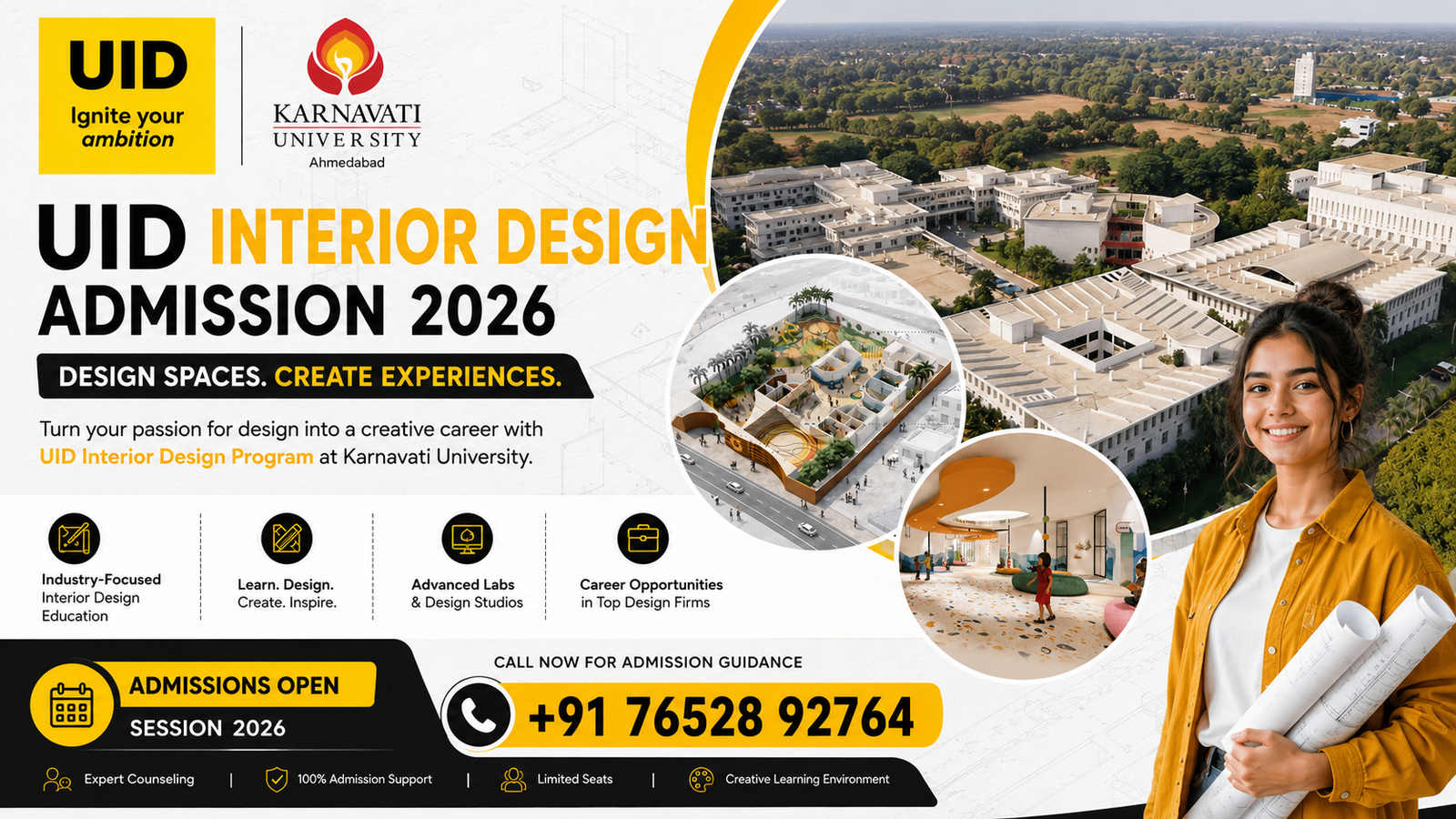
If you are passionate about transforming ordinary spaces into functional, beautiful and meaningful environments, pursuing a career in interior design can be an exciting choice. UID Interior Design Admission 2026 offers aspiring designers an opportunity to develop creative thinking, technical knowledge, visualization skills and an understanding of contemporary spaces.
Unitedworld Institute of Design (UID), a constituent institute of Karnavati University, Gujarat, is known for design-focused education across multiple creative disciplines. Students interested in interior and spatial design can explore UID as one of their options for building professional design skills through studio learning, projects and interdisciplinary exposure.
This comprehensive guide covers important information related to UID Interior Design Admission 2026, including the program, eligibility, admission process, skills, curriculum, fees, career possibilities and frequently asked questions.
Important: Admission criteria, program names, fees, dates and selection procedures may change for the 2026 admission cycle. Candidates should verify the latest details from the official UID/Karnavati University admission information before applying.
About Unitedworld Institute of Design (UID)
Unitedworld Institute of Design is part of Karnavati University and provides education in different areas of design. The institute aims to create an environment where students can combine creativity with practical problem-solving.
Design education is different from many conventional academic programs because students are expected to learn through observation, experimentation, research, conceptual development and hands-on projects.
For students considering UID Interior Design Admission, this approach can help them understand that interior design involves much more than simply decorating a room.
Professional interior and spatial design may involve understanding:
- Space planning
- User requirements
- Materials and finishes
- Furniture
- Lighting
- Colour
- Ergonomics
- Design research
- Technical representation
- Visualization
- Sustainability
- Building environments
- Digital design tools
- Design communication
Students gradually learn how these elements can work together to create spaces that are both aesthetically appealing and functional.
Why Study Interior Design?
Interior spaces influence the way people live, work, learn, shop, relax and interact. From homes and offices to hotels, restaurants, retail stores and public spaces, thoughtful interior design can significantly affect the user experience.
Interior design is therefore a combination of creativity, functionality and problem-solving.
A designer must understand what a client or user requires and then translate those requirements into an effective spatial solution.
Students who enjoy drawing, conceptualizing spaces, experimenting with materials, studying architecture, creating visual presentations or solving creative problems may find interior design particularly interesting.
A professional education in the field can help students move from creative ideas to practical design solutions.
UID Interior Design Admission 2026
Students planning to apply for UID Interior Design Admission 2026 should begin preparing early.
Design admissions can involve multiple stages depending on the university’s current selection policy. These may include an application, design aptitude assessment, portfolio evaluation, interview or other selection components.
Candidates should carefully review the official admission notification for the 2026 session before submitting their application.
The general process may involve:
- Reviewing the available interior/spatial design program.
- Checking the latest eligibility requirements.
- Completing the admission application.
- Submitting the required academic and personal documents.
- Appearing for the applicable design admission or selection process.
- Completing portfolio/interview requirements if applicable.
- Checking the admission result.
- Completing fee payment and enrollment within the specified deadline.
Applicants should treat this as a general roadmap rather than a confirmed 2026 procedure because the university may revise its admission process.
UID Interior Design Eligibility 2026
Eligibility is one of the first things students should verify before applying.
For undergraduate design education, applicants generally need to have completed or be appearing for their Class 12 or equivalent qualifying examination from a recognized board, subject to the university’s current rules.
However, students should not rely solely on general eligibility information.
Before applying for UID Interior Design Admission 2026, check the official requirements regarding:
- Qualifying examination
- Minimum marks, if applicable
- Accepted education boards
- Stream requirements
- Age requirements, if any
- Entrance or aptitude assessment
- Portfolio requirements
- Interview requirements
- Documents needed for verification
The exact eligibility criteria applicable to the 2026 intake should always be confirmed from official admission information.
What Do Students Learn in Interior Design?
Interior design education develops both creative and technical abilities.
During their studies, students may encounter areas such as design fundamentals, visual communication, materials, spatial planning and digital visualization.
Depending on the specific curriculum, learning areas can include:
Design Fundamentals
Students begin by understanding fundamental principles such as balance, proportion, scale, rhythm, composition, form, colour and visual hierarchy.
These concepts establish the foundation for more advanced spatial design projects.
Space Planning
Effective interior design depends heavily on how a space is organized.
Students learn to consider movement, accessibility, circulation, furniture placement and the relationship between different areas.
Materials and Finishes
Materials can dramatically influence the appearance, functionality, durability and environmental impact of an interior.
Students may explore wood, metal, glass, stone, textiles, composites and emerging materials.
Furniture and Ergonomics
Furniture is closely connected to the way people use interior spaces.
Understanding human dimensions and ergonomics can help designers create environments that are practical and comfortable.
Lighting
Lighting affects atmosphere, visibility, functionality and perception.
Interior design students may learn about natural and artificial lighting and how different lighting approaches influence a space.
Digital Visualization
Modern interior designers increasingly use digital tools to develop and communicate ideas.
Students may gain exposure to software used for drafting, modeling, visualization, presentation and design development.
Sustainable Design
Sustainability has become an increasingly important consideration in the built environment.
Students can learn to consider responsible material choices, energy efficiency, resource use, durability and environmentally conscious design strategies.
Studio-Based Learning
One of the most important parts of design education is the studio environment.
Rather than learning only through lectures and examinations, students work on design problems and projects.
A typical studio project may require students to:
Research → Observe → Ideate → Sketch → Develop → Prototype/Model → Visualize → Present → Refine
This process encourages students to explain why they made particular design decisions instead of simply producing visually attractive work.
Regular critiques and presentations can also strengthen communication skills and teach students to receive constructive feedback.
Importance of a Design Portfolio
A portfolio is an important professional asset for a design student.
It demonstrates not only what a student has created but also how they think.
A strong interior design portfolio may contain:
- Concept sketches
- Research
- Mood boards
- Floor plans
- Material studies
- Models
- Furniture concepts
- Digital renders
- Photography
- Process documentation
- Final presentations
Students should avoid treating their portfolio as merely a collection of final images.
Showing the development of an idea can help demonstrate creative thinking and problem-solving ability.
If a portfolio is required during the UID admission process, candidates should carefully follow the university’s latest portfolio guidelines.
UID Interior Design Fees 2026
Students searching for UID Interior Design fees 2026 should verify the latest fee structure directly from official university information.
Fees may vary according to the exact program, academic year and additional institutional charges.
Apart from tuition fees, students and families should consider the possible overall cost of design education, which may include:
- Tuition
- Registration or admission charges
- Hostel accommodation
- Food
- Transportation
- Design materials
- Model-making supplies
- Printing
- Software or digital resources
- Laptop/computer requirements
- Educational visits and project expenses
Creating a complete education budget before confirming admission can help families plan more effectively.
Students should also check whether any scholarships or financial assistance opportunities are available for the relevant academic session.
Skills Required for Interior Design
You do not need to be a professional designer before entering design school.
However, certain interests and abilities can be particularly useful.
Creativity
Designers constantly develop new concepts and approaches to problems.
Observation
Good designers notice how people interact with objects and spaces.
Visualization
The ability to imagine how a space might look and function after transformation is valuable.
Communication
Interior designers must communicate ideas to clients, colleagues, contractors and other stakeholders.
Problem-Solving
Real-world projects involve constraints related to dimensions, materials, budgets and user requirements.
Attention to Detail
Small decisions involving lighting, materials, dimensions or finishes can significantly influence the final result.
Willingness to Learn
Design trends, materials, technology and software continually evolve. Successful designers therefore continue learning throughout their careers.
Career Opportunities After Interior Design
Interior and spatial design education can lead to multiple professional directions.
Graduates may explore opportunities such as:
- Interior Designer
- Spatial Designer
- Residential Interior Designer
- Commercial Space Designer
- Retail Space Designer
- Hospitality Design Professional
- Exhibition and Experience Designer
- Furniture Designer
- Design Consultant
- Interior Stylist
- Visualizer
- Design Researcher
- Entrepreneur or Independent Design Professional
Career outcomes depend on a student’s skills, portfolio, specialization, professional experience and market conditions.
Students should therefore use their university years to build a strong body of work rather than relying solely on the qualification.
Interior Design vs Interior Decoration
These terms are often used interchangeably, but they are not necessarily identical.
Interior decoration generally concentrates more heavily on the visual styling of existing spaces, including colours, furniture, accessories and finishes.
Interior design can involve deeper consideration of spatial planning, human needs, functionality, materials, furniture, lighting and the overall experience of an interior environment.
Professional roles and legal definitions can vary by jurisdiction, so students should understand the scope of the specific program they intend to pursue.
How to Prepare for UID Interior Design Admission 2026
Students can begin preparing before applications open.
Start by observing spaces around you. Consider why a café feels welcoming, why an office is easy or difficult to navigate, or why particular colours and materials work well together.
Practice sketching regularly. Your drawings do not always have to be perfect. The goal is to improve observation and visual communication.
You can also:
- Maintain a sketchbook.
- Explore basic perspective drawing.
- Study famous interior and architectural projects.
- Experiment with photography.
- Create mood boards.
- Learn basic model making.
- Explore materials and textures.
- Work on small creative projects.
- Practice communicating your ideas.
- Develop a portfolio if required.
Most importantly, avoid simply copying designs found online. Admission preparation should demonstrate your own thinking and creativity.
Why Location and Campus Environment Matter
Design education benefits from collaboration.
A campus environment can expose students to classmates from different creative disciplines and encourage them to exchange ideas.
When comparing universities, applicants should consider more than promotional photographs.
Evaluate factors such as:
- Studios
- Workshops
- Learning resources
- Faculty
- Curriculum
- Interdisciplinary opportunities
- Student projects
- Industry interaction
- Campus environment
- Accommodation
- Location
- Internship exposure
A campus visit, where practical, can provide useful insight before making a final decision.
Things to Check Before Taking Admission
Before paying admission fees, candidates should verify important information carefully.
Check:
- Exact program name
- Program duration
- Recognition/status of the university
- Current eligibility criteria
- Admission procedure
- Selection requirements
- Fee structure
- Refund policy
- Hostel and accommodation costs
- Scholarship terms
- Curriculum
- Faculty and facilities
- Internship opportunities
- Student portfolio/work
- Important deadlines
Students should obtain critical admission and payment information from official university sources.
Frequently Asked Questions About UID Interior Design Admission 2026
1. Is UID Interior Design Admission 2026 open?
Admission schedules can change during the application cycle. Candidates should check the latest official UID/Karnavati University admission announcement for current application status and deadlines.
2. What is the eligibility for UID Interior Design Admission?
Eligibility depends on the specific program and current university regulations. Undergraduate applicants generally need an eligible Class 12/equivalent qualification, but candidates should verify the official 2026 requirements.
3. Is an entrance test required for UID Interior Design?
UID may have a design admission/selection process depending on the program and admission cycle. Check the official 2026 admission guidelines for the applicable assessment format.
4. Is a portfolio required?
Portfolio requirements can vary by program and selection process. If a portfolio is requested, applicants should follow UID’s official specifications.
5. What are the UID Interior Design fees for 2026?
The latest fee structure should be checked directly through official university admission information because tuition and other charges can change between academic sessions.
6. What careers are available after studying Interior Design?
Students may explore residential, commercial, retail, hospitality, spatial, furniture, visualization, styling and consultancy-related opportunities, depending on their skills and specialization.
7. Can students from any Class 12 stream apply?
Stream requirements depend on the university’s official eligibility criteria for the particular program. Applicants from Science, Commerce or Arts/Humanities backgrounds should confirm their eligibility before applying.
8. Where is UID located?
Unitedworld Institute of Design is associated with Karnavati University in Gandhinagar, Gujarat, in the Ahmedabad metropolitan region.
Final Thoughts
Choosing a design school is an important decision because the learning environment, curriculum, studio exposure and opportunities to build a portfolio can influence your professional development.
For students who want to explore a creative career focused on spaces and user experiences, UID Interior Design Admission 2026 may be worth considering.
Before applying, research the program carefully, understand its curriculum, compare it with other design institutes and evaluate the total cost of education. Prepare for any required design assessment and begin developing your creative portfolio early.
Interior design is not simply about making spaces attractive. It involves understanding people, solving spatial problems and combining creativity, functionality, technology and thoughtful design.
With consistent practice, curiosity and a strong portfolio, students can gradually transform their passion for designing spaces into professional opportunities.