LPU Bachelor of Medical Radiology and Imaging Technology Admission 2027: Course, Eligibility, Fees, Career Scope & Admission Guide
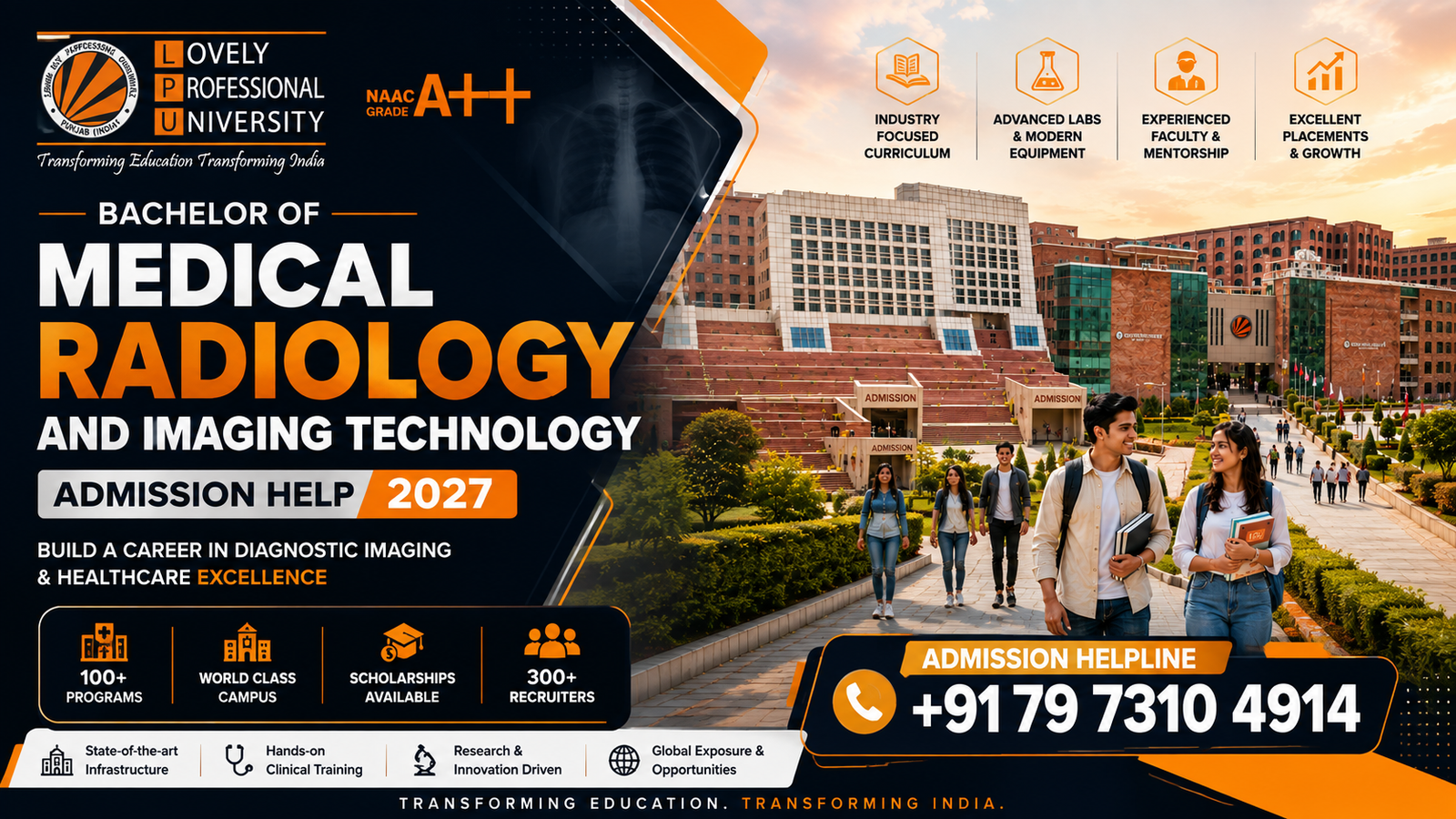
The healthcare industry is rapidly evolving with the adoption of advanced diagnostic technologies, digital imaging systems, and modern medical equipment. Medical imaging plays an important role in helping healthcare professionals examine the human body, identify abnormalities, and support diagnosis and treatment planning. For students interested in healthcare technology rather than conventional medical degrees, Medical Radiology and Imaging Technology can be an attractive career-oriented field.
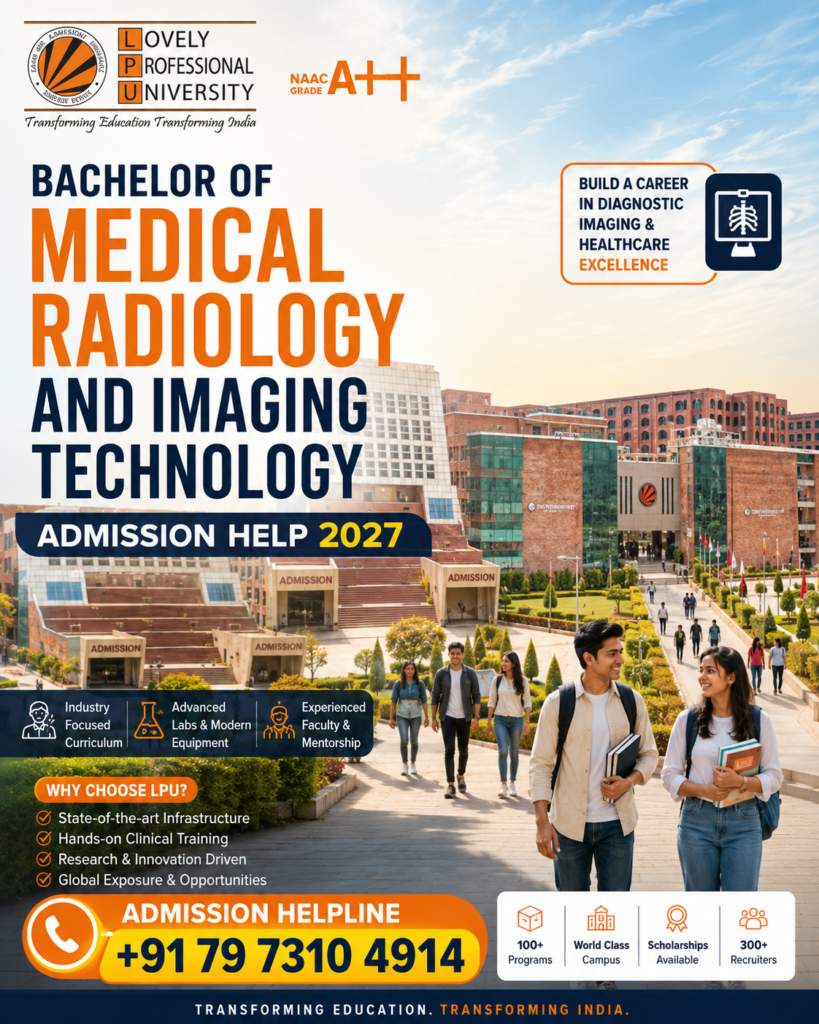
Students exploring LPU Bachelor of Medical Radiology and Imaging Technology Admission 2027 may want to understand the course structure, eligibility requirements, admission process, fees, career opportunities, and skills involved before making a decision.
Lovely Professional University (LPU) offers a broad range of healthcare and allied health education opportunities. Students considering admission for the 2027 academic session should always verify the exact program title, duration, eligibility, fee structure, scholarship rules, and admission requirements from LPU’s latest official prospectus or admission portal, as university policies can change between academic sessions.
This guide provides an informative overview for students researching LPU Medical Radiology and Imaging Technology Admission 2027.
What is Bachelor of Medical Radiology and Imaging Technology?
Bachelor of Medical Radiology and Imaging Technology is an undergraduate-level healthcare program focused on the technologies and procedures used to create diagnostic images of the human body.
Medical imaging professionals work alongside radiologists, physicians, nurses, and other healthcare professionals. Their responsibilities can involve operating sophisticated imaging equipment, preparing patients for examinations, maintaining imaging quality, following radiation-safety procedures, and assisting healthcare teams during diagnostic procedures.
Depending on the curriculum and clinical training offered by an institution, students may learn about areas such as:
- Human anatomy and physiology
- Radiographic techniques
- Medical imaging principles
- Radiation physics
- Radiation protection and safety
- Patient positioning
- Image processing
- Computed Tomography (CT)
- Magnetic Resonance Imaging (MRI)
- Diagnostic imaging equipment
- Healthcare ethics
- Patient care
- Quality assurance
- Clinical radiography
The exact subjects and practical exposure should be confirmed from LPU’s curriculum applicable to the 2027 batch.
Why Study Medical Radiology and Imaging Technology?
Modern hospitals increasingly rely on imaging technologies to support medical diagnosis. X-rays, CT scans, MRI examinations and other imaging procedures allow healthcare professionals to examine internal structures without conventional exploratory procedures in many situations.
This creates a need for appropriately educated and trained professionals who understand imaging technology as well as patient care and safety.
Students who enjoy biology, healthcare, technology, medical equipment and practical laboratory work may find this field particularly interesting.
Unlike a purely theoretical science degree, radiology and imaging technology education typically places considerable importance on practical skills. Students need to understand not only how imaging systems function but also how to interact responsibly with patients and healthcare professionals.
LPU Medical Radiology and Imaging Technology Admission 2027
Students searching for LPU Medical Radiology Admission 2027 should begin their preparation well before the admission deadline.
The admission process generally involves checking the relevant program requirements, completing an application, providing academic information and satisfying any university-specific admission conditions.
For the 2027 session, candidates should confirm:
Program availability: Make sure the exact Medical Radiology and Imaging Technology program is offered for the intended 2027 intake.
Eligibility criteria: Check qualifying examination requirements, required subjects and minimum marks.
Application dates: Admission schedules can have multiple phases and deadlines.
Entrance or selection requirements: Determine whether admission requires an entrance examination, merit-based selection or another process.
Fees: Review tuition fees and any applicable academic, examination, hostel or other charges.
Scholarships: Check scholarship eligibility, deadlines and documentation separately.
Students should rely on LPU’s official 2027 admission information for final decisions.
LPU Medical Radiology and Imaging Technology Eligibility 2027
Eligibility is one of the most important considerations before applying.
Programs in medical radiology and allied healthcare commonly require students to have completed 10+2 or an equivalent qualification with relevant science subjects. However, the required combination of subjects, minimum percentage, entrance requirements and other conditions vary between universities and admission cycles.
Therefore, students should not assume that eligibility requirements from previous years will automatically apply to LPU Admission 2027.
Before applying, verify the university’s latest requirements concerning:
- 10+2 qualification
- Required science subjects
- Minimum qualifying marks
- Accepted education boards
- Entrance or admission criteria
- Age requirements, where applicable
- Eligibility for international applicants, if relevant
This avoids application problems caused by relying on outdated information.
Course Curriculum and Subjects
Medical Radiology and Imaging Technology combines healthcare sciences with technical education.
During the early stages of study, students may develop a foundation in subjects such as anatomy, physiology, basic healthcare sciences and medical terminology.
As students progress, education can become increasingly focused on imaging technology and clinical applications.
Typical areas associated with the discipline can include radiographic positioning, radiation physics, imaging equipment, CT technology, MRI principles, patient care and radiation safety.
Practical sessions are particularly important because medical imaging professionals work with sophisticated equipment and patients in clinical environments.
The curriculum may also introduce students to professional ethics, hospital procedures, documentation and quality-control practices.
Again, students should consult the official LPU syllabus for the exact subjects applicable to their batch.
Practical and Clinical Training
Clinical exposure is an important component of education in medical imaging.
Classroom learning can explain the scientific principles behind radiography and imaging, but practical training helps students understand how these concepts are applied in real healthcare environments.
Clinical learning may help students develop skills related to patient preparation, positioning, equipment handling, imaging procedures, professional communication and safety protocols.
Students should specifically investigate the clinical-training structure when comparing universities.
Questions worth asking include how practical sessions are conducted, what equipment students can access, whether clinical exposure is included, and how internships or training placements are structured.
Medical Imaging Technologies Students May Encounter
Medical imaging is broader than conventional X-ray radiography.
X-Ray Imaging
X-ray imaging is one of the most familiar diagnostic techniques. Students can learn the principles behind producing radiographic images while understanding patient positioning and radiation protection.
Computed Tomography (CT)
CT technology uses X-rays and computer processing to create detailed cross-sectional images. Understanding CT involves imaging principles, patient preparation, equipment operation and safety considerations.
Magnetic Resonance Imaging (MRI)
MRI uses magnetic fields and radiofrequency technology to produce detailed images. MRI requires specialized knowledge because its operating principles and safety considerations differ significantly from conventional radiography.
The technologies covered and depth of instruction depend on the university curriculum.
Skills Developed During the Course
Success in medical radiology requires more than technical knowledge.
Students may develop a combination of technical, interpersonal, analytical and professional skills, including:
- Understanding imaging equipment
- Patient positioning
- Communication
- Attention to detail
- Radiation-safety awareness
- Teamwork
- Problem solving
- Image-quality awareness
- Professional ethics
- Patient-care skills
- Clinical documentation
- Time management
Communication is particularly important because imaging professionals frequently interact with patients who may be anxious, uncomfortable or unfamiliar with a medical procedure.
Career Scope After Medical Radiology and Imaging Technology
Graduates with suitable qualifications and training can explore opportunities in healthcare environments where diagnostic imaging services are provided.
Potential workplaces can include:
- Hospitals
- Diagnostic imaging centres
- Medical laboratories
- Specialty clinics
- Healthcare institutions
- Research organizations
- Medical equipment companies
- Academic or training institutions after appropriate further qualifications
The exact role available to an individual depends on qualifications, practical competence, regulatory requirements, experience and employer criteria.
Possible Career Roles
Depending on training and applicable professional requirements, graduates may explore roles associated with:
Radiologic/Radiography Technology: Working with radiographic imaging procedures and supporting diagnostic imaging departments.
CT Imaging: Professionals with suitable training may work with computed tomography systems.
MRI Imaging: Further skills and training can support opportunities involving magnetic resonance imaging.
Imaging Department Support: Graduates may work in technical or operational positions within diagnostic imaging facilities.
Medical Equipment Industry: Imaging equipment manufacturers and healthcare technology businesses can offer technical, application-support or related opportunities.
Students should verify professional licensing or registration requirements applicable to the role and location where they intend to work.
Higher Education Opportunities
A bachelor’s qualification does not necessarily have to be the end of the academic journey.
Students interested in specialization, research, teaching, management or advanced technical knowledge may consider postgraduate education.
Possible areas can include medical imaging technology, radiological sciences, healthcare management, public health or other related fields, depending on eligibility and career goals.
Higher education can be particularly useful for students interested in research or academic careers.
LPU Medical Radiology Fees 2027
Students frequently search for LPU Bachelor of Medical Radiology and Imaging Technology Fees 2027.
Rather than relying on an older fee figure, candidates should verify the fee applicable to their specific 2027 admission session directly from LPU.
The total cost of education can potentially include more than tuition. Depending on individual circumstances and university policies, students may need to consider expenses associated with accommodation, examinations, laboratory requirements, transportation, books or other academic needs.
Before accepting admission, obtain a clear understanding of the complete applicable fee structure and payment schedule.
Scholarships for LPU Admission 2027
Scholarships can make higher education more accessible for eligible students.
LPU may offer scholarship opportunities under different criteria. However, scholarship categories, qualifying examinations, academic thresholds, amounts and deadlines can change.
Students interested in scholarships should investigate them before completing admission, rather than assuming a scholarship will automatically be available.
Check the official scholarship policy applicable to the 2027 intake and understand the conditions for continuation, where relevant.
How to Prepare for Admission 2027
Students planning to apply can make the process easier by preparing documents and researching requirements in advance.
Keep academic mark sheets, identity documents, photographs and other commonly required documents organized. Verify that names and personal details are consistent across official documents.
Students should also compare the course based on curriculum, practical exposure, clinical training, infrastructure, fees and long-term career goals rather than choosing solely on promotional claims.
Most importantly, verify important admission information from official university sources before paying fees.
Why Medical Radiology Can Be a Promising Career Field
Healthcare increasingly depends on technology.
Medical imaging sits at the intersection of healthcare, science and advanced technology, making it an appealing option for students who want to contribute to patient care while developing specialized technical expertise.
Professionals in this area can play an important supporting role in diagnostic services by helping produce accurate medical images while maintaining appropriate patient-care and safety standards.
The field also continues to evolve as imaging technology, digital systems, artificial intelligence and healthcare infrastructure develop.
For students comfortable working with patients and sophisticated medical technology, Medical Radiology and Imaging Technology can provide a focused pathway into the allied healthcare sector.
Frequently Asked Questions
Is Medical Radiology and Imaging Technology a medical course?
It is generally categorized within allied healthcare/medical imaging education. Students learn scientific, technical and patient-care aspects of diagnostic imaging rather than training as medical doctors.
What is the eligibility for LPU Medical Radiology Admission 2027?
Eligibility should be checked from LPU’s official 2027 admission information because qualifying subjects, minimum marks and other requirements may change.
Does the course include practical training?
Practical and clinical learning are important in this field. Candidates should review LPU’s official curriculum to understand the exact laboratory, practical and clinical-training components.
What are the career options after graduation?
Depending on qualifications, training and regulatory requirements, graduates can explore opportunities in hospitals, diagnostic centres, imaging departments, healthcare organizations and medical technology companies.
What are the LPU Medical Radiology fees for 2027?
Students should check the official LPU 2027 fee structure rather than relying on previous-year figures because fees may be revised.
Conclusion
LPU Bachelor of Medical Radiology and Imaging Technology Admission 2027 can be worth exploring for students interested in combining healthcare education with modern diagnostic technology. The discipline provides exposure to medical imaging concepts, patient care, radiographic procedures, imaging equipment and safety practices while preparing students for a technology-driven healthcare environment.
Before applying, candidates should carefully evaluate the 2027 eligibility criteria, curriculum, clinical training, fee structure, scholarship opportunities, admission process and career possibilities.
Students should also remember that admission rules and course information can change. Final decisions should therefore be based on LPU’s official information for the 2027 academic session.
Admission Help 2027: +91 79 7310 4914